AI tools can turn a short description into a complete song, making music creation more accessible than ever. But the ability to generate tracks quickly has also sparked a debate: when does AI-made music feel thoughtful, and when does it become “AI slop”?
The answer isn’t simply whether AI was involved. Creative direction, careful listening, revision, and respect for other artists all matter. Here’s what the term means—and how to use aimusicmaker.org to make AI songs with more intention.
What Is AI Slop in Music?
“AI slop” is a dismissive term for AI-generated content that feels generic, rushed, or made in bulk without much care. In music, it often describes tracks that sound interchangeable: familiar genre cues, predictable lyrics, repetitive melodies, and arrangements that don’t seem to serve a clear idea.
Common signs can include:
- Vague or clichéd lyrics that could fit almost any song
- A melody that repeats without developing
- An arrangement that feels like a collection of genre conventions rather than a deliberate choice
- Abrupt transitions, awkward phrasing, or vocals that don’t fit the lyrics
- Large volumes of near-identical tracks published with little review
The label is subjective. A listener might find a simple, repetitive song moving, while another hears it as uninspired. But “AI slop” is not just another name for AI-assisted music. An artist can use AI as one tool in a thoughtful creative process; a track can also feel careless even if no AI was involved. The difference often comes down to the intention and decisions behind the final work.
Why Is AI Slop Becoming Such a Big Debate?
AI music is quick to generate, and that changes the scale of creation. When it takes little time to produce many tracks, it can be tempting to publish everything rather than select and refine the strongest work. That possibility raises concerns across the music community.
Bulk generation and low-quality music
A flood of quickly generated songs can make it harder for listeners to find work that feels personal or distinctive. The concern isn’t that every prolific creator is careless. It’s that high-volume publishing can reward quantity over musical development, especially when tracks receive little human review.
Streaming recommendations and royalties
Streaming services use recommendation systems to help listeners discover music. As AI-generated catalogs grow, people have raised questions about how platforms identify, rank, and recommend tracks—and how royalty pools are shared. The specific effects depend on platform policies and the way music is uploaded and streamed, but the broader concern is clear: a larger supply of tracks could affect attention and income for musicians.
Disagreements among musicians, listeners, and AI creators
Musicians may worry about competition, consent, credit, and the value of human craft. Some listeners enjoy AI music as a new creative medium; others feel it lacks the lived experience they want from a song. AI creators may see these tools as instruments that help them explore ideas, make demos, or create music they couldn’t otherwise produce.
These views can coexist. The debate is not only about sound quality—it’s also about creative work, access, identity, and what listeners value in music.
Copyright, voice cloning, and transparency
Questions around training data, ownership, licensing, and commercial use can be complex and may vary by jurisdiction, platform, and use case. Voice imitation adds a particular concern: making a vocal sound like a recognizable real person without permission can mislead listeners and affect that person’s rights and reputation.
Creators can reduce risk by using original lyrics and concepts, avoiding prompts that ask for a specific artist’s voice or a near-copy of a song, and being transparent about AI involvement when it matters to their audience or project. Check the relevant tool’s terms and the rules of any platform where you plan to share or sell a track.
Is All AI-Generated Music AI Slop?
No. “AI-generated” describes how a track was made; “AI slop” is a judgment about its quality, originality, or care. Consider three different examples:
- An AI-generated first draft: A creator enters a broad prompt and receives a song. The result might be useful as a sketch, but it may contain generic lyrics or an arrangement that needs work. A draft is a starting point, not automatically a finished artistic statement.
- A song revised by a person: The creator rewrites lines, adjusts the structure, selects a stronger take, and shapes the track around a specific mood or story. AI is part of the process, but human choices give the result direction.
- An unauthorized imitation: A prompt asks for a specific living singer’s voice or a close copy of a recognizable song. Even if the output sounds polished, it raises issues of consent, originality, and possible rights conflicts.
These examples are not equivalent. The meaningful questions include what the creator contributed, whether the work has its own identity, and whether it respects other people’s creative rights.
How to Make AI Music That Doesn't Sound Like Slop
A better result usually starts before you press “generate.” Treat the tool as a collaborator for drafts, not as a substitute for making choices.
Write more specific music prompts
A useful prompt gives the generator musical direction rather than a pile of vague adjectives. Include details such as:
- Purpose: a reflective song for a quiet end-credits scene
- Genre or influences: acoustic indie folk, without naming a specific artist to imitate
- Mood and energy: restrained and wistful, gradually becoming hopeful
- Tempo and groove: a relaxed mid-tempo pulse with a gentle backbeat
- Instrumentation: fingerpicked guitar, soft piano, and subtle strings
- Vocal direction: intimate, clear vocals with restrained delivery
- Structure: a short verse, a memorable chorus, a second verse, and a bridge that builds
For example:
An intimate indie-folk song for a reflective end-credits scene. Relaxed mid-tempo groove, fingerpicked acoustic guitar, soft piano, and subtle strings. Clear, understated vocals. Begin sparsely, let the chorus open up, and end with a gentle instrumental outro. Use original lyrics about leaving a familiar place and feeling ready for change.
The goal is not to prescribe every note. It’s to give the music a coherent destination.
Optimize lyrics and song structure
Lyrics can sound generic when they rely on familiar phrases without specific images or a clear point of view. Give the song a situation: who is speaking, what happened, and what has changed? Replace broad lines like “I feel lost in the night” with details that could belong to this particular narrator.
Structure matters too. Decide what each section should do:
- Verse: establish the scene or story
- Chorus: express the central idea in a memorable way
- Bridge: reveal a new perspective or create contrast
- Outro: resolve the emotion, or intentionally leave it open
If you provide your own lyrics, read them aloud before generating a song. Look for lines that are difficult to sing, repeated ideas, or a chorus that doesn’t clearly express the song’s central thought.
Avoid overly repetitive melodies and arrangements
Repetition can make a hook memorable, but too much can make a track feel static. Listen for whether the chorus changes the energy, whether the melody has a clear shape, and whether each instrument has a purpose. If every section uses the same density and rhythm, consider asking for a quieter verse, a more open chorus, or a bridge with a contrasting texture.
Small changes can add character: a brief instrumental pause, a different rhythmic feel in the bridge, or a new melodic phrase near the end. The aim isn’t to add complexity for its own sake; it’s to make each section support the song.
Listen, select, and revise
Don’t treat the first generation as the final answer. Listen all the way through, then ask specific questions:
- Does the opening establish the right mood?
- Are the lyrics understandable and natural?
- Does the chorus feel distinct from the verse?
- Is there a moment that sounds awkward or repetitive?
- Does the ending feel intentional?
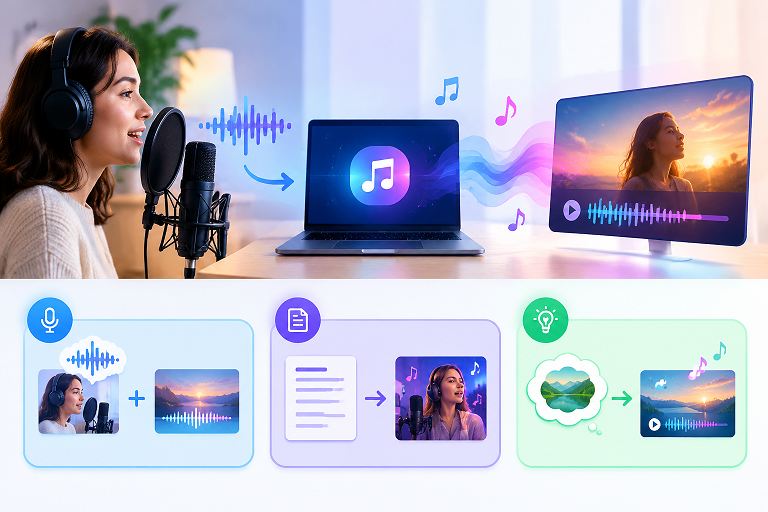
Keep the parts that work and refine what doesn’t. On aimusicmaker.org, you can start from a text description or lyrics, generate a track, and use the available creation and editing options to refine your direction. Rather than producing a large batch and publishing every result, make a few considered versions, compare them, and choose the one that best fits your idea.
Respect copyright and avoid unauthorized voice imitation
Describe a musical direction, not an attempt to pass as a particular artist. Instead of requesting a named singer’s voice or a song “just like” a specific hit, describe broad qualities such as vocal range, instrumentation, mood, tempo, and arrangement. Use lyrics and source material you have the right to use, and check the applicable terms before distributing or monetizing a track.
Can AI Music Still Be Creative and Original?
AI can help people explore musical ideas, sketch arrangements, and make songs without traditional studio resources. That can be creatively valuable. But a generated result isn’t automatically original or meaningful just because it is new, and human involvement doesn’t automatically guarantee quality either.
Originality can come from the choices made throughout the process: an unusual premise, specific lyrics, an unexpected combination of sounds, a carefully shaped structure, or the decision to reject a polished but predictable result. AI may generate possibilities, but the creator still decides what to keep, what to change, and what the song is meant to express.
A balanced approach recognizes both sides. AI can expand access to music-making, while musicians and listeners can continue to ask important questions about consent, credit, transparency, and the value of creative labor.
Create Your Own Music with More Intention
AI music tools make it easy to move from an idea to a playable draft. The more important step is deciding what you want that draft to say and then listening closely enough to improve it.
With aimusicmaker.org, you can start with a clear musical direction, describe the sound you want, or bring in lyrics as a starting point. Adjust your prompt when the first result misses the mark, compare the versions you create, and keep only the parts that serve your song.
The aim is not to generate as many tracks as possible. It’s to make a song with a point of view—one shaped by deliberate choices, careful listening, and respect for the people whose music inspires you.